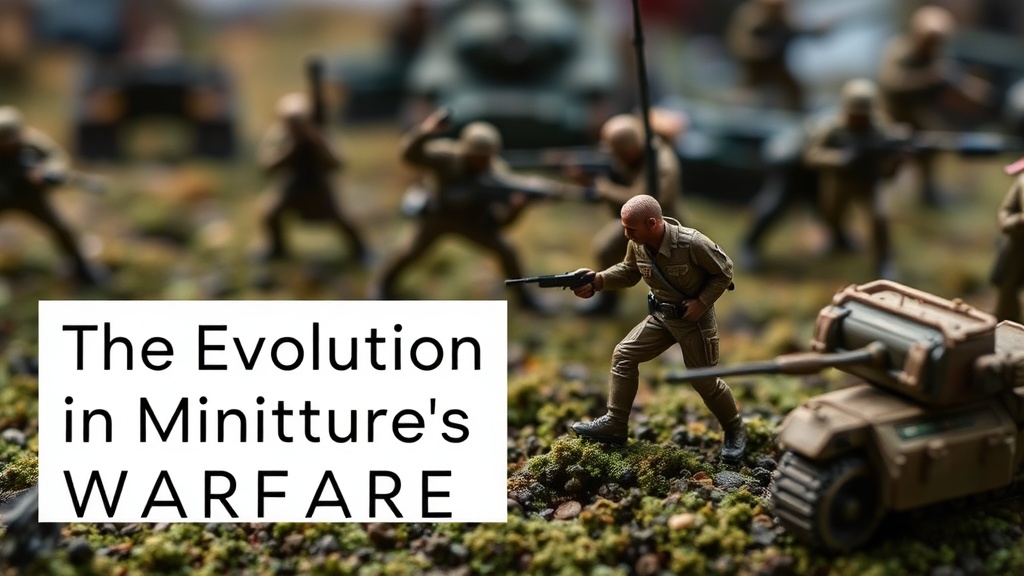
The Evolution of Scale in Miniature Warfare

A collector lines up a dozen 1:72 scale infantrymen on a wooden table, only to realize their rifles are slightly too long for the hand grips. Next to them, a 1:35 scale tank looks massive, almost hulking, compared to the tiny soldiers. This mismatch in scale breaks the immersion of a tabletop battle. This post looks at how the scale of miniature warfare has shifted from simple toy soldiers to highly detailed scale models, and why choosing the right size matters for your collection.
Scale isn't just about size; it's about the level of detail you can actually see. When you move from 1:72 to 1:35, you aren't just getting a bigger toy. You're getting a completely different way to experience history. It changes how you paint, how you display, and how much space you need on your shelves.
What Is the Difference Between Toy Soldiers and Scale Models?
The main difference lies in the level of historical accuracy and the intended use of the figure. Toy soldiers are often stylized, slightly chunky, and designed for play, whereas scale models are built for precision and display. If you've ever looked at a plastic model kit, you know the difference immediately.
Toy soldiers, like the classic green army men, don't follow a strict mathematical scale. They are "scale-ish." They look like soldiers, but a 1:72 green soldier might actually be taller than a 1:72 scale historical figure from a high-end brand like Warlord Games. This is because toy soldiers are meant to be durable. They can survive a sandbox or a messy playroom.
Scale models are a different beast entirely. These are designed to be exact replicas. If a manufacturer produces a 1:35 scale figure, every buckle on a uniform and every rivet on a tank is meant to be mathematically proportional to the real thing. You'll find these used heavily in the wargaming community for games like Bolt Action. They require a steady hand and a lot of patience.
The jump in detail is massive. You can't really paint a fine facial expression on a standard piece of molded green plastic. But with a 1:35 scale figure, you can use a tiny brush to add a shadow under the brow or a bit of grit on the uniform. It's a massive step up in complexity (and time spent at the hobby desk).
If you're just starting out, don't worry about getting it perfect. Most people start with the smaller stuff because it's cheaper. But keep in mind that as you go larger, your cost per figure goes up significantly.
| Feature | Standard Toy Soldiers (e.g., Green Army Men) | Scale Models (e.g., 1:35 Scale Infantry) |
|---|---|---|
| Primary Goal | Durability and Play | Historical Accuracy and Display |
| Detail Level | Low/Simplified | High/Highly Detailed |
| Scale Accuracy | Variable/Approximate | Strictly Proportional |
| Common Use | Casual Play/Decor | Wargaming/Museum Displays |
Why Does Scale Matter for Tabletop Wargaming?
Scale matters because it dictates the physical footprint of your battlefield and the level of detail your eyes can process. If you're playing a game, you need to know if your infantry fits the scale of your vehicles.
In tabletop gaming, consistency is everything. If you have a 1:72 scale infantry unit standing next to a 1:48 scale truck, the truck is going to look like a monster truck. It ruins the sense of realism. Most serious collectors stick to one primary scale for their main battle sets.
The most common scales in the hobby are:
- 1:72 (25mm/28mm-ish equivalent): Great for large-scale battles with hundreds of troops. It's budget-friendly and takes up very little space.
- 1:48: A middle ground that offers more detail than 1:72 but is still relatively compact.
- 1:35: The gold standard for military modeling. It provides incredible detail for vehicles and infantry.
- 1:16: Massive. These are often used for high-end museum-quality displays.
I've seen collectors spend years perfecting a 1:35 scale WWII scene. It's a massive undertaking. You'll spend hours making sure the mud on the boots matches the mud on the tank treads. It's a rabbit hole—but a rewarding one. If you're interested in the long-term health of your collection, you might want to look into how plastic degradation affects your figures, because larger, more detailed figures are often more sensitive to environmental changes.
How Much Does a Scale Model Collection Cost?
The cost of a scale model collection depends entirely on the scale you choose and the level of detail you demand. Smaller scales are generally much cheaper than larger scales.
Here's the reality: a single 1:35 scale soldier can cost significantly more than a bag of 50 1:72 scale soldiers. You're paying for the engineering, the historical accuracy, and the quality of the casting. Brands like Dragon Models or Academy produce kits that require assembly, painting, and often a significant investment in specialized tools.
Don't forget the hidden costs. It isn't just the figure itself. You'll need:
- High-quality acrylic or enamel paints.
- Fine-tipped brushes (and more brushes).
- Primers and sealants to protect the paint.
- Glue (specifically plastic cement for scale models).
- A dedicated workspace with decent lighting.
If you're on a budget, stick to the smaller scales. 1:72 is a fantastic way to build a massive army without breaking the bank. You can get a lot of "bang for your buck" here. However, if you want that "wow" factor for a centerpiece, the 1:35 scale is worth the extra spend. It's the difference between a toy and a piece of art.
One thing to watch out for is the resale market. Sometimes, highly detailed scale models hold their value better than mass-produced toys. But be careful—if you aren't careful, you can end up with a collection of "junk" that isn't actually a consistent scale. I've spent a lot of time looking at how to identify authentic vintage figures, and the same logic applies to scale models. A poorly made, non-scale model will never hold its value the way a precision-engineered piece will.
The transition from collecting "toys" to collecting "scale models" is a major milestone for many. It's the moment you move from playing with things to preserving history. Whether you're painting a tiny soldier or a massive tank, the scale you choose defines your entire hobby experience.
"The detail in a 1:35 scale model isn't just about looking good; it's about the story the figure tells through its gear and posture."
If you're looking to dive into the world of scale, start small. Pick a theme—maybe a specific regiment or a specific tank division—and stick to it. Consistency is the key to a collection that actually looks like a cohesive world rather than a pile of mismatched plastic.