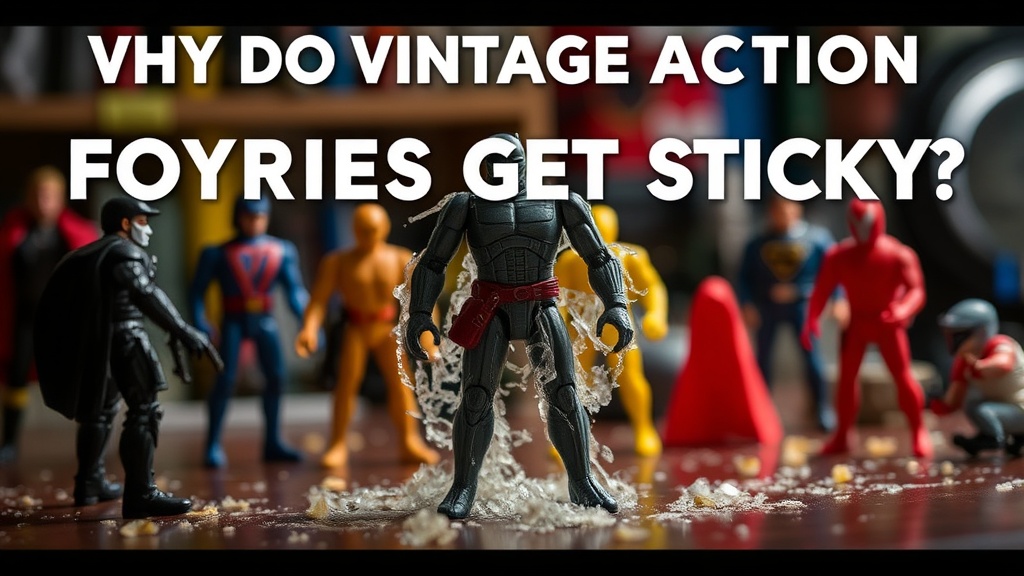
Why Do Vintage Action Figures Get Sticky? Understanding Plastic Degradation and Preservation

This guide breaks down exactly why vintage action figures develop that dreaded sticky film, which materials are most vulnerable to chemical breakdown, and the specific steps you can take to halt or even reverse the early stages of damage. You'll learn the science behind plasticizer migration without the chemistry degree, identify which figures in your collection are at highest risk of deterioration, and get practical cleaning methods that won't strip paint or cause further harm. Whether you're dealing with 1980s G.I. Joe figures, 1990s Power Rangers, or vintage MEGO dolls, the preservation principles remain consistent—and acting quickly can mean the difference between saving a prized piece and watching it slowly turn to dust in your display case.
Why Do Plastic Toys Develop a Sticky Residue Over Time?
That tacky, almost greasy feeling on older figures isn't dirt, mold, or leftover packaging adhesive—it's a chemical process called plasticizer migration. PVC, or polyvinyl chloride, is the soft plastic used for limbs, capes, and accessories in countless action figures from the 1970s through today. In its raw form, PVC is rigid, so manufacturers add chemicals called plasticizers to keep the material flexible and poseable. These plasticizers don't chemically bond with the PVC; they're simply mixed in and held in suspension.
Over decades, temperature fluctuations and oxidation cause these plasticizers to break down and migrate to the surface of the plastic. Think of it like oil separating from salad dressing when left sitting—the plasticizers rise to the top, creating that characteristic sticky, sometimes waxy film. The Smithsonian Museum Conservation Institute identifies this as one of the most common degradation pathways in modern polymer collections. Heat accelerates the process dramatically—figures stored in hot attics or near radiators can develop sticky surfaces in just a few years, while identical pieces kept in climate-controlled environments might remain fine for decades.
The sticky layer creates secondary problems beyond the unpleasant texture. It attracts dust and airborne pollutants, which embed in the tacky surface and become nearly impossible to remove completely. Worse, the migrating plasticizers can react with painted details, causing colors to bleed or shift. If you've ever seen a figure where the flesh tone has turned greenish or the paint looks "melted," you're likely seeing plasticizer migration attacking the paint layer from beneath.
Which Vintage Figure Materials Are Most at Risk of Breaking Down?
Not all plastics age the same way, and understanding these differences helps you prioritize which figures need immediate attention and inspection. Soft PVC—the flexible plastic used in limbs, capes, and accessories for lines like vintage Star Wars, G.I. Joe, and Masters of the Universe—is by far the biggest culprit for sticky syndrome. The very property that makes these figures fun to pose (pliable plastic) is what makes them chemically unstable over time.
Hard plastics like ABS (acrylonitrile butadiene styrene), commonly used for torsos and heads, and polystyrene, found in model kits and some accessories, don't typically get sticky. Instead, they grow brittle, yellow, and prone to cracking. You might notice stress marks turning white on ABS torsos or tiny spiderweb cracks appearing in polystyrene weapons. Rubber compounds present another category entirely—these dry out, crack, or turn gummy. Vintage MEGO figures from the 1970s are particularly notorious for "rubber rot," where the elastic waistbands or rubber heads simply crumble after forty-plus years.
Certain toy lines used particularly unstable PVC formulations. According to research from the Plastics Historical Society, the mid-1990s saw experimentation with alternative plasticizers that seemed stable initially but degraded rapidly after twenty years. This explains why some Generation 2 Transformers or 1995-era Batman figures seem to deteriorate faster than their 1985 counterparts. If you're cataloging risks, check soft accessories first: lightsabers, guns, capes, and flexible limbs. These items often show the first signs of trouble while the harder plastic torso remains intact.
How Can You Safely Clean Sticky Residue Without Stripping Paint?
Cleaning sticky figures requires patience and a gentle hand—aggressive scrubbing or harsh solvents will remove paint apps and damage decals permanently. Start with the gentlest method possible: warm water with a tiny drop of mild dish soap. Use a soft microfiber cloth (never paper towels, which can micro-scratch soft plastics) and gently wipe the surface in circular motions. You'll need to apply slight pressure, but don't scrub hard. The goal is to lift the plasticizer layer from the surface, not abrade the plastic beneath it.
For residue that soap won't touch, isopropyl alcohol at 70% concentration works effectively—but you must test it first. Dampen a cotton swab and touch it to an inconspicuous area like the back of a leg or inside a cape. Wait ten minutes and check for color transfer, surface clouding, or texture changes. If the test spot looks fine, dampen your cloth (don't soak it) and work in small sections. The alcohol breaks down the plasticizers without the mechanical abrasion of scrubbing.
Some collectors use specialty products like "Ooze Away" or industrial plastic cleaners, though these aren't always necessary for home collectors. A trick from the conservation community involves using a 50/50 mixture of water and white vinegar for initial cleaning, followed by plain water rinses. Whatever method you choose, dry the figure thoroughly with a soft cloth—trapped moisture breeds mold, which creates permanent black spots that no cleaning removes. After cleaning, let the figure air dry for 24 hours before returning it to storage.
Here's the reality check: cleaning is temporary. The plasticizers will migrate again because the chemical breakdown continues inside the plastic matrix. You're buying time and improving appearance, not fixing the underlying chemistry. However, regular gentle cleaning combined with proper storage can extend a figure's display life significantly—sometimes by decades.
What Storage Conditions Make Plastic Degradation Worse?
Heat is the primary accelerator of plastic breakdown—every ten degrees Celsius above room temperature roughly doubles the rate of chemical reactions in polymers. Figures stored in attics reaching 100°F in summer are aging four to eight times faster than those kept at 70°F. UV light is equally destructive; it breaks polymer chains directly, causing both the yellowing you see in old computer cases and the structural weakness that makes figures brittle. Even indirect sunlight through windows damages plastic over years of exposure, which is why display cases near windows are particularly risky.
Humidity creates compounding problems. Moisture penetrates microscopic surface cracks in aging plastic, promoting internal hydrolysis—a chemical reaction that literally breaks plastic apart from the inside. High humidity also encourages mold growth on sticky plasticizer films, creating black spots that etch into the surface permanently. The Getty Conservation Institute recommends maintaining stable conditions between 60-70°F with relative humidity around 50% for mixed polymer collections—essentially normal room conditions without extremes.
Your choice of storage container matters more than you might think. Acid-free archival boxes are the gold standard for serious collectors, but plastic bins work fine if you choose the right plastic. Avoid PVC storage containers—ironically, these can off-gas plasticizers themselves and accelerate degradation in the figures they hold. Look for polyethylene or polypropylene containers marked with recycling codes 2, 4, or 5. These plastics are chemically stable and won't interact with your collection. Never store sticky figures in airtight containers where they can touch other pieces; migrating plasticizers can actually transfer between figures, almost like a contagious chemical reaction that damages clean pieces.
When Is Sticky Plastic a Sign of Irreversible Damage?
Sometimes the chemical breakdown has progressed too far for cleaning to help meaningfully. If a figure's plastic has turned sticky and the material has become spongy, rubbery-soft, or yields easily to gentle pressure, the polymer structure itself is collapsing. You might notice a sharp chemical odor—often described as vinegary, fishy, or like a swimming pool—that doesn't fade after cleaning and airing out. These are signs that the plastic isn't just off-gassing plasticizers; it's actively decomposing into its constituent chemicals.
Certain figure lines are notorious for this "vinyl rot." Early He-Man figures with the Taiwan or Malaysia markings, some 1980s Star Wars bootlegs made with alternative plastic formulations, and specific G.I. Joe batches from 1994-1996 have particularly unstable compositions. Once rot sets in, no amount of climate control stops the process. The material will continue breaking down until it becomes a sticky, useless mass—or worse, dries into a hard, warped shell.
When you identify a figure with advanced deterioration, isolation becomes critical. Store it separately from healthy figures to prevent plasticizer transfer. Some collectors seal these pieces in archival polyester sleeves (Mylar) that contain the off-gassing without trapping moisture. Document the piece with detailed photographs, enjoy it while you can, and accept that some plastics simply weren't formulated to last fifty years. Manufacturers in the 1970s through 1990s designed toys for children's play, not museum longevity.
Collecting vintage figures means accepting inherent entropy. These objects have finite lifespans built into their chemistry. Our preservation efforts—careful cleaning, climate control, proper storage—are essentially a holding action against time. The sticky film on your figures isn't a personal failure; it's simply polymer chemistry doing what chemistry does. Handle your collection gently, store it wisely, and appreciate these pieces now. Nothing lasts forever—not even plastic.