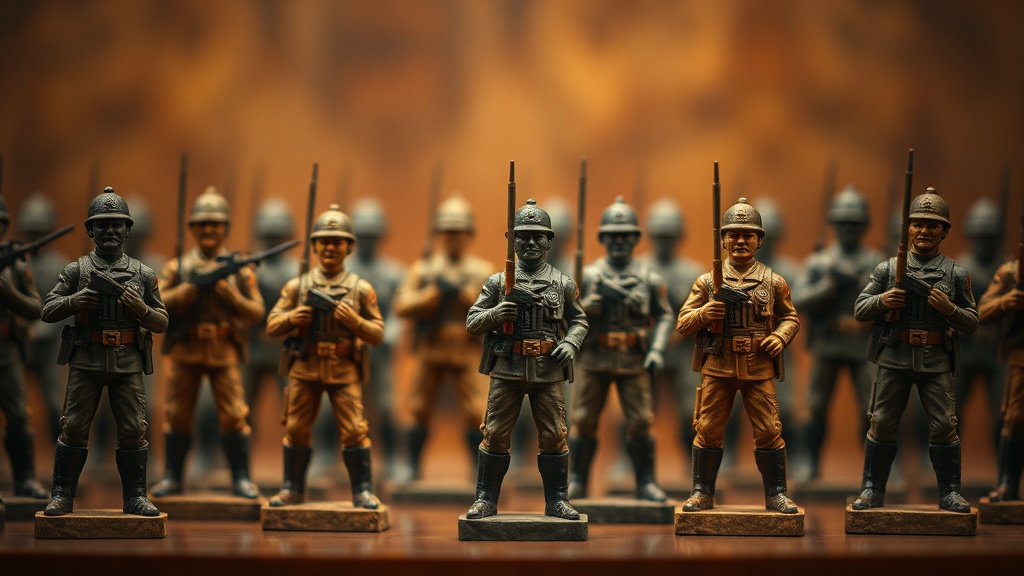
The Ultimate Guide to Collecting Vintage Toy Soldiers

Vintage toy soldiers represent one of the most accessible entry points into serious collecting — and one of the most rewarding. This guide covers everything needed to build a meaningful collection: identifying authentic pieces from major manufacturers, spotting reproductions, understanding valuation factors, and knowing where to buy with confidence. Whether drawn to the hand-painted craftsmanship of pre-war lead figures or the nostalgic appeal of 1960s plastic armies, collectors find that knowledge protects investment and deepens appreciation for these miniature artifacts of military history.
What Are the Most Valuable Vintage Toy Soldier Brands?
The most valuable vintage toy soldiers typically come from British, German, and American manufacturers operating between 1893 and 1966. Certain names dominate auction results and dealer price lists — not because of marketing, but because of historical significance, craftsmanship quality, and scarcity.
Britains Ltd. stands as the undisputed giant. Founded in 1893 by William Britain, this London-based firm revolutionized the industry by inventing hollow-casting — a process that made lead figures affordable while maintaining detail. Their Home series (British soldiers) and Foreign series (international armies) remain the standard by which others are measured. Pre-1940 Britains in original condition command premium prices — sometimes hundreds of dollars for a single figure.
Elastolin and Lineol dominated German production from the 1920s through 1960s. These companies specialized in composite figures (a mixture of sawdust, glue, and kaolin) rather than metal. Their detailed World War I and II subjects — particularly artillery pieces and personality figures like Hitler or Mussolini — attract serious collectors. Condition matters enormously; composite material cracks and deteriorates when stored improperly.
Marx Toys produced plastic soldiers by the millions from the 1950s through 1970s. While individual Marx figures rarely exceed $10-20, complete playsets in original boxes fetch thousands. Their Battleground and Desert Fox sets represent the pinnacle of American toy soldier production.
Other significant manufacturers include:
- Timpo Toys — British plastic and lead figures, known for swoppet (interchangeable) designs
- Heyde — German maker of exceptionally detailed 48mm figures, highly sought after
- King & Country — Modern but already collectible, producing 54mm and 90mm metal figures since 1984
- Airfix — Plastic kits and figures beloved by collectors who grew up in the 1960s and 70s
The catch? Value depends heavily on period. Pre-1966 lead figures carry a premium because production largely shifted to plastic afterward — partly due to cost, partly due to lead safety concerns.
How Do You Identify Authentic Vintage Toy Soldiers?
Authenticating vintage toy soldiers requires examining material, mold marks, paint characteristics, and base markings. Fakes and reproductions flood the market — especially online — making verification skills essential.
Material Testing
Lead figures (pre-1966) feel noticeably heavier than plastic or modern resin. They develop a soft, matte patina over decades — never the glossy finish of recent reproductions. Composite figures (Elastolin, Lineol) have a distinctly different texture — slightly rough, almost like dense cardboard. Tap a suspected composite figure gently; it sounds hollow and produces a dull thud compared to metal.
Here's the thing about magnets: lead and tin are non-magnetic. If a "vintage" metal figure sticks to a magnet, it's either steel (some modern reproductions) or has iron content suggesting later manufacture. This simple test eliminates many fakes immediately.
Mold Marks and Base Stamps
Authentic pieces carry manufacturer identifiers on their bases. Britains stamped "BRITAINS" or "ENGLAND" on most pre-war figures. Post-war pieces often show "BRITAINS LTD" or "MADE IN ENGLAND." German manufacturers used various markings — Elastolin typically stamped numbers indicating mold patterns.
Study reference books before buying. David N. Schmitt's Metal Miniatures: A Collectors' Guide to Brittains and Hollowcast Toy Soldiers remains the definitive resource. The official Britains archives also provide authentication guidance for serious collectors.
Paint Analysis
Original paint on vintage figures shows specific aging patterns. Lead toys develop "bloom" — a white, powdery oxidation that wipes off with a soft cloth. This is actually desirable to many collectors (it proves age). Repainted figures usually show brush strokes, overly bright colors, or paint that pools in crevices — factory painting was thinner and more controlled.
Worth noting: never clean vintage figures aggressively. That white oxidation? Removing it destroys value. Serious collectors prefer "untouched" condition even with surface wear over "improved" pieces.
Where Should You Buy Vintage Toy Soldiers?
Serious collectors source vintage toy soldiers through specialized dealers, auction houses, collector shows, and carefully vetted online marketplaces. Each channel offers different advantages — and risks.
Specialized Dealers
Established dealers like Old Toy Soldiers or Trader Tins provide guarantees of authenticity and detailed provenance. You'll pay 20-40% more than auction prices — but you receive expertise, return privileges, and often condition grading that matches hobby standards. For newcomers, this premium buys education and protection.
Auction Houses
Major auctioneers — Bonhams, Christie's, and specialized firms like Vectis Auctions (UK) — regularly feature toy soldier collections. Vectis particularly dominates this niche, holding dedicated militaria and toy auctions quarterly. Their catalogs provide invaluable research material even when not bidding.
Local estate auctions occasionally yield incredible finds. The downside? No guarantees, limited descriptions, and competition from knowledgeable dealers attending the same sales.
Collector Shows and Fairs
Nothing replaces examining figures in person. The London Toy Soldier Show (held biannually) and regional events like the Chicago Toy Soldier Show allow hands-on inspection before purchase. Dealers at these events stake their reputations on accuracy — misrepresentation spreads quickly in tight-knit collecting communities.
Online Marketplaces
eBay remains the largest marketplace — and the most dangerous for novices. Search terms matter enormously: "vintage toy soldiers" yields different results than "Britains lead soldiers" or "Marx plastic army." The best eBay sellers provide multiple photos including base markings and any damage.
Facebook groups and specialized forums (like Toy Soldier Gallery) offer community vetting. Members often post "is this authentic?" requests before purchasing — collective knowledge catches problems individual collectors might miss.
Understanding Condition and Value Factors
Vintage toy soldier valuation follows established grading standards — though interpretation varies between dealers. Understanding these factors prevents overpayment and helps set realistic expectations when selling.
| Grade | Description | Typical Value Impact |
|---|---|---|
| Mint | Perfect paint, no wear, original packaging if applicable | 200-400% of base value |
| Excellent | Minor wear, complete paint, no damage | Base value |
| Very Good | Visible wear, some paint loss, no repairs | 50-75% of base value |
| Good | Heavy wear, possible minor repairs | 25-40% of base value |
| Fair/Poor | Significant damage, missing parts, repainting | 10-20% of base value |
Rarity trumps condition in some cases. A damaged Heyde personality figure still commands substantial money because so few survived — whereas common Britains infantry in similar condition might go unsold.
Original packaging multiplies value dramatically. A Britains set 2083 (Yeomen of the Guard) sells for perhaps $150 loose — but $800+ in its original illustrated box. This creates a dilemma for collectors: display figures (the point of collecting) or preserve packaging (the investment protection). Most serious collectors eventually acquire duplicates — one for display, one stored.
Storage and Display Best Practices
How collectors store vintage toy soldiers directly affects their longevity and value preservation. Lead figures are surprisingly fragile — they bend, paint flakes, and develop corrosion in poor conditions.
Temperature stability matters enormously. Attics and basements wreak havoc. Lead expands and contracts with temperature swings, eventually cracking paint. Composite figures suffer worst — they literally crumble in fluctuating humidity. Ideal storage maintains 65-70°F with consistent humidity around 45-50%.
Display cases should use UV-filtering glass. Sunlight fades original paint — particularly the scarlet uniforms so common in British military figures. Museum putty (reversible, non-staining adhesive) secures figures against vibration and accidental bumps without damage.
That said, there's something deeply satisfying about a well-arranged battle scene. The National Army Museum in London rotates its toy soldier displays regularly — partly for preservation, partly to showcase different historical periods. Home collectors might follow this example, displaying different regiments seasonally while storing others in acid-free tissue.
Building a Thematic Collection
Successful collections usually follow themes rather than accumulating random purchases. The most focused collections — and often the most valuable — concentrate on specific conflicts, manufacturers, or scales.
Conflict-based collecting remains most popular. The Napoleonic Wars offer incredible variety — British, French, Prussian, Russian, and Austrian forces, plus artillery, cavalry, and infantry variants. Waterloo anniversary years (2015 was the 200th) spike interest and prices. World War I collections have grown dramatically since 2014's centenary commemorations.
Manufacturer specialization allows deep expertise. A collector focusing solely on Britains 1950s plastic Herald series can achieve complete knowledge — identifying rare color variations, understanding production changes, recognizing factory errors. This expertise translates into better purchases and more enjoyment.
Scale consistency matters for display. The hobby standardized on 54mm (approximately 1:32 scale) for metal figures, while plastic soldiers often ran smaller at 1:72 or 1:32. Mixing scales creates jarring displays — a 54mm Napoleon beside 1:72 infantry looks absurd.
Start with a manageable scope. Rather than "all toy soldiers," consider "British colonial forces 1879-1902" or "Marx 54mm plastic from 1963-1968." Narrow focus prevents expensive mistakes — you're not tempted by that beautiful (but off-theme) Civil War set.
The most rewarding collections reflect genuine interest in military history, craftsmanship, or childhood nostalgia. Value appreciation happens naturally when collecting from knowledge and enthusiasm rather than speculative investment. Study first, buy second, and never rush — these figures waited decades to reach the market; they can wait until you're certain.