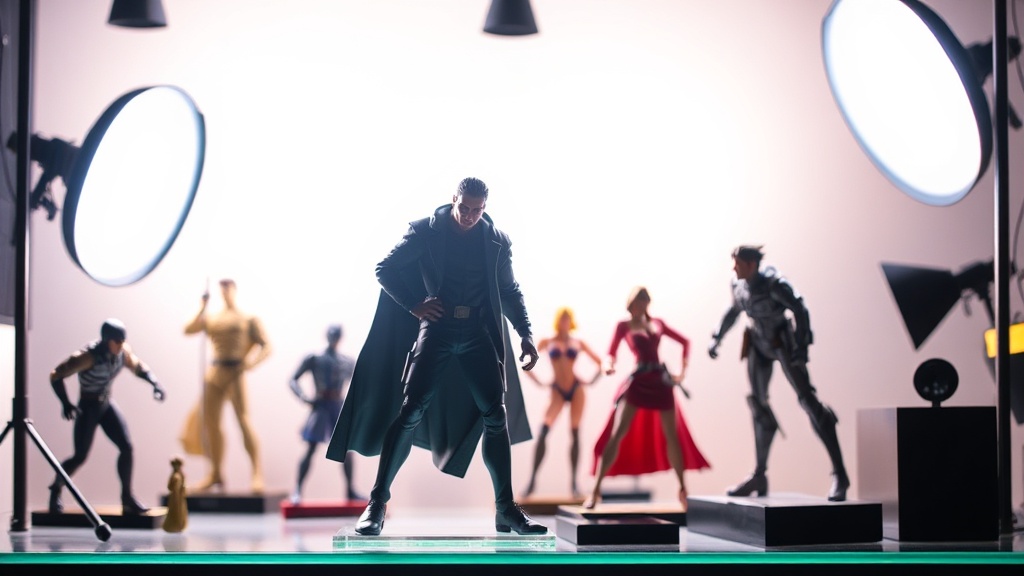
Finding High Quality Lighting for Figure Displays

Why Most Collectors Fail at Display Lighting
Most collectors believe that a bright room or a single overhead light is enough to showcase a collection, but they're usually wrong. Brightness isn't the same as quality lighting. If you just blast your figures with light, you'll end up with harsh shadows, washed-out paint details, and—worst of all—potential heat damage to your plastic. This guide breaks down how to select the right light sources, manage color temperature, and protect your investment from light-induced degradation.
A high-end figure deserves more than a desk lamp. You need a system that highlights sculpt and texture without making your display look like a cheap toy aisle. We're looking at everything from LED strips to dedicated spotlighting.
What Type of Light is Best for Action Figures?
LED (Light Emitting Diode) lighting is the best option for collectors because it produces very little heat and offers the most control over color and brightness. Unlike traditional incandescent bulbs, LEDs won't bake your figures or cause the plastic to become brittle over time. This is a huge deal if you're displaying sensitive items like high-end resin statues or vintage 1/6 scale figures.
When choosing a light source, you'll run into three main types of setups:
- LED Strip Lights: These are great for long shelves or the underside of cabinets. They provide a continuous glow that fills a space evenly.
- Spotlights/Puck Lights: These are perfect for a single "hero" figure. They create a dramatic effect by focusing light on a specific subject.
- Micro-LEDs: Often used in dioramas, these are tiny enough to hide within a scene without being visible to the naked eye.
One thing to watch out for is the "hot spot" effect. If your LED strip is too close to the glass or the figure, you'll see a bright, ugly line of light rather than a soft glow. (I've made this mistake more than once with my own displays—don't be like me.)
If you're using high-end display cases, you might want to pair your lighting with selecting safe acrylic cases to ensure the material itself doesn't yellow or degrade under constant light exposure.
How Do I Choose the Right Color Temperature?
You should choose a color temperature based on the aesthetic of your collection and the material of the figures. Color temperature is measured in Kelvin (K), and it determines whether your light looks "warm" (yellowish) or "cool" (bluish).
For most modern action figures with vibrant, saturated colors, a neutral white light (around 4000K to 5000K) works best. It keeps the colors looking true to life. If you're displaying a gritty, weathered military figure or a weathered statue, a warmer light (2700K to 3000K) can add a sense of atmosphere and depth.
Here is a quick breakdown of how different temperatures affect your display:
| Temperature (Kelvin) | Look & Feel | Best For... |
|---|---|---|
| 2700K - 3000K | Warm/Amber | Vintage figures, dioramas, "moody" displays |
| 4000K - 4500K | Neutral White | General displays, modern action figures |
| 5500K - 6500K | Cool/Daylight | Highlighting white/silver details, high-contrast shots |
Note that too much "cool" light can make your figures look sterile and lifeless. It's a fine line to walk.
How Much Light Exposure is Safe for Figures?
Minimal light exposure is the safest rule, as even LED light can cause long-term UV damage if not managed correctly. While LEDs are much safer than the old-school halogen bulbs, they can still emit small amounts of UV radiation that can fade paint or cause "plastic rot" over several years.
To keep your collection safe, you should look for lights that are UV-filtered. If you are using a display in a room with a lot of natural sunlight, you'll need to be even more careful. Sunlight is a killer for collectibles. Even through a window, UV rays are relentless.
A few tips for protecting your plastic:
- Use UV-Protective Glass: If you have a high-end cabinet, ensure the glass or acrylic has UV protection.
- Control the Ambient Light: Keep your display out of direct sunlight.
- Avoid Incandescent Bulbs: These are heat engines. They will eventually warp your figures or melt delicate parts.
- Check the CRI: Look for a high Color Rendering Index (CRI). A CRI of 90 or higher ensures the colors look exactly as the manufacturer intended.
If you notice your figures are starting to look a bit "off" or if you see signs of wear, you might want to check your cleaning habits. For instance, removing dust from delicate figure joints is important, but you must be careful not to let dust buildup act as a heat sink under your lights.
Common Lighting Pitfalls to Avoid
It's easy to overdo it. I've seen displays that look like a landing strip because the collector went too heavy on the LEDs. A good display should have shadows. Shadows create depth. Without shadows, your figures will look flat and two-dimensional.
One thing people often forget is the power source. If you're using a bunch of cheap, battery-powered LED puck lights, you'll find yourself constantly swapping batteries. It's a headache. I always recommend looking for plug-in options or USB-powered systems that can be integrated into a single power strip. It keeps the wires clean and the power consistent.
Another issue is placement. If your light is directly above the figure, you'll get a shadow under the chin and under the nose, making the figure look "deathly." Try angling your lights or using a light diffuser to soften the output. A diffuser is just a way to spread the light out so it isn't a single harsh point of origin.
If you're a serious collector, you might want to look into the Wikipedia page on Light-Emitting Diodes to understand the technical side of how these components actually function. Understanding the physics can help you make better buying decisions.
The goal isn't just to make the collection visible; it's to make it look spectacular. Don't settle for a setup that just "works." Build a setup that looks intentional.