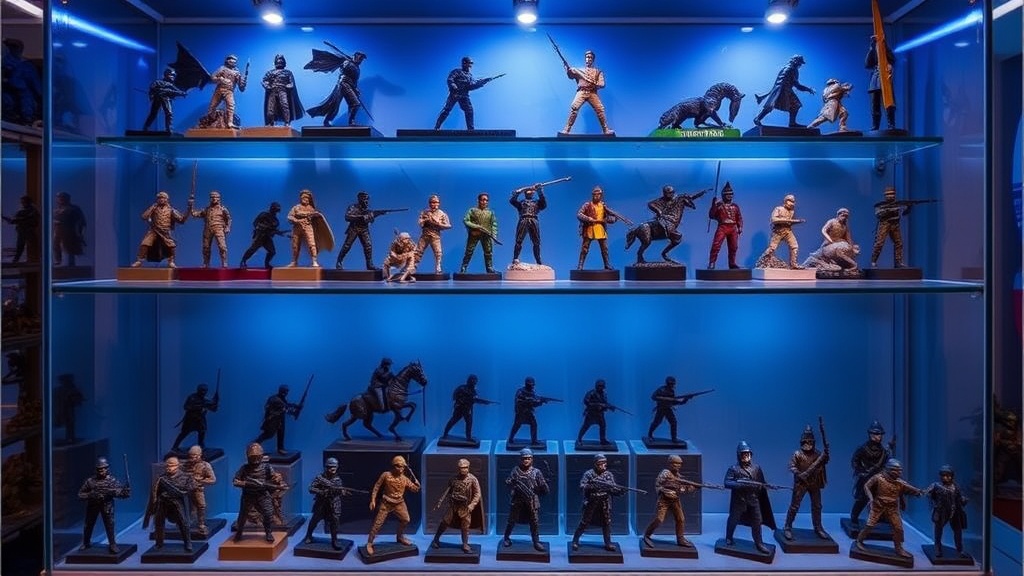
Displaying Your Toy Soldier Collection: Cases, Shelves & Creative Ideas

What's Covered in This Guide (and Why Display Matters)
This guide breaks down practical, tested methods for displaying toy soldier collections—from budget-friendly shelving to museum-quality cases. Whether you've got twenty figures or two thousand, how they're shown affects everything from their condition to your daily enjoyment. Poor storage leads to dust accumulation, UV damage, and accidental knocks. Good display choices protect the investment while making the collection actually visible. You'll find specific product recommendations, real-world pricing, and creative solutions for spaces of all sizes. No vague advice—just actionable options you can implement this weekend.
What Are the Best Display Cases for Toy Soldier Collections?
The best display cases balance protection, visibility, and cost. For most collectors, acrylic cases with UV-filtering properties outperform glass on weight and safety grounds. Wood-and-glass curio cabinets work well for larger collections in dedicated rooms. The specific choice depends on figure scale, collection size, and whether dust-sealing matters more than frequent access.
Acrylic Cases: The Collector Standard
Acrylic display cases dominate the hobby for good reason. They're half the weight of glass, won't shatter if bumped, and many manufacturers now build in UV protection. Cases for individual figures—like those from BCW Hobbies or Ultra-PRO—run $8 to $25 depending on size. A standard 54mm figure fits comfortably in a 3"×3"×5" case. Larger 1:6 scale figures need the "Deluxe Figure Display" series from BCW, typically $18 to $30 each.
The catch? Not all acrylic is created equal. Cheaper cases from generic Amazon sellers often lack UV coating and yellow within two years. Worth noting: BCW's Museum Series specifically advertises 98% UV blocking. That's the difference between vibrant paint jobs and faded uniforms a decade from now.
For regimented displays—rows of identical soldiers—consider stackable acrylic cases. The Stackable Figure Display Box from The Container Store ($12.99 each, or $10.39 with their membership) uses a locking base system. You can build walls of figures without individual wobble. Here's the thing, though: these aren't fully sealed. Dust gets in eventually. You'll need compressed air every few months.
Glass Curio Cabinets: The Furniture Approach
When a collection outgrows individual cases, furniture becomes the logical step. The IKEA FABRIKÖR ($299) remains the unofficial standard for mid-size collections. It's 81 cm wide, has three adjustable glass shelves, and the metal frame comes in dark gray or beige. The glass is standard float glass—no UV filtering—so placement away from windows matters.
For something built specifically for collectibles, Michael's Studio Démer curio cabinets offer better dust sealing. The 5-shelf model ($449, frequently 50% off with coupons) uses magnetic door closures and felt-lined shelves. The oak finish looks dated to some tastes, but the construction is solid.
That said, there's a middle path worth considering. Custom acrylic covers for existing bookcases—made by local plastics shops or ordered through TAP Plastics—protect collections without buying new furniture. A 36"×12"×60" five-sided cover typically runs $150 to $200. You get dust sealing and UV protection on furniture you already own.
How Should You Arrange Toy Soldiers on Shelves?
Toy soldiers should be arranged by theme, era, or manufacturer—never randomly. Grouping creates visual coherence and helps locate specific pieces quickly. Vertical spacing matters more than horizontal; figures need room to "breathe" so details aren't lost in clutter. Most collectors underestimate how much depth they need—60mm scale figures with bayonets fixed require 4 to 5 inches of shelf depth minimum.
By Historical Period
Chronological arrangement tells a story. Napoleonic figures on upper shelves, World War I in the middle, modern military below. This works particularly well for Britain's or King & Country collections where uniforms changed dramatically across eras. Visitors grasp the progression instantly.
The vertical hierarchy has practical benefits too. Older figures—often more fragile, made with lead-based alloys—stay higher away from casual bumps. Modern resin and plastic pieces handle lower traffic better.
By Regiment or Unit
Serious collectors of specific makers (Britain's, Conte, First Legion) often arrange by regiment. All Coldstream Guards together, regardless of specific pose. This creates striking visual blocks—rows of identical red coats or khaki uniforms. The repetition emphasizes the "army" aspect of the collection.
Here's the thing about regiment displays: they reveal gaps painfully. A missing drummer boy stands out when surrounded by complete companies. Some collectors prefer mixed arrangements specifically to hide incomplete sets. That's a valid choice—just not one that impresses at shows or club meetings.
By Manufacturer
Purist collectors—those focused on production quality comparisons—arrange by maker. All W. Britain figures together, all King & Country in another section, First Legion elsewhere. This approach highlights the stylistic differences between manufacturers. W. Britain's traditional hollow-cast style contrasts sharply with King & Country's detailed resin work.
The catch? Visitors without deep hobby knowledge won't understand the logic. They'll see random groupings. Worth noting if you occasionally show the collection to non-collectors.
| Arrangement Style | Best For | Visual Impact | Practicality |
|---|---|---|---|
| Chronological (Historical) | Educational displays, broad collections | Medium | High (easy to expand) |
| Regiment/Unit Grouping | Single-era specialists, army builders | Very High | Medium (gaps show clearly) |
| By Manufacturer | Quality comparison, purist collectors | Low to outsiders | Medium (manufacturers change) |
| Thematic (battles, dioramas) | Creative display, limited space | Very High | Low (hard to modify) |
What Creative Display Ideas Work for Small Spaces?
Small spaces demand vertical thinking and multi-purpose furniture. Shadow boxes, floating shelves arranged in gallery patterns, and under-bed storage with lift mechanisms all work. The key is accepting that not every figure stays on permanent display—rotation systems let large collections shine in limited square footage.
Shadow Boxes: Depth and Drama
Shadow boxes add dimensionality that flat shelves can't match. A 3-inch depth lets figures stand with fixed bayonets, raised swords, or artillery pieces in firing positions. The MCS Industries Shadow Box (available at Michaels, $34.99 to $79.99 depending on size) includes linen backing and UV-protective acrylic.
Depth creates drama. A single charging cavalryman in a shadow box draws more attention than twenty figures packed on a crowded shelf. For collectors with a few centerpiece pieces—perhaps signed limited editions or rare factory paint variations—this approach maximizes impact per square inch.
That said, shadow boxes commit you to a specific arrangement. Removing backing, rearranging figures, and resealing takes effort. They're display commitments, not flexible storage.
Gallery Walls: The Floating Shelf Approach
Floating shelves arranged in asymmetrical "gallery" patterns turn collections into legitimate wall art. The IKEA LACK floating shelf ($14.99, 43 inches long) holds surprising weight—22 pounds when properly anchored. At 4 inches deep, it's perfect for 54mm figures in single ranks.
The creative opportunity comes from arrangement. Three shelves staggered at different heights. A tall vertical stack for cavalry figures. Corner installations that use otherwise dead space. Wall-mounted displays also stay above the dust zone—floor-level collections need constant cleaning.
Here's the thing about walls: they're already full in many homes. Gallery walls require clearing space, patching old holes, and potentially upsetting partners who liked the previous art. Negotiation skills matter as much as display skills.
Rotation Systems: The Practical Reality
Most serious collectors own more figures than display space allows. Rotation isn't failure—it's strategy. Seasonal themes (Christmas troops in December, D-Day anniversaries in June) keep displays fresh. Campaign-focused rotations (Waterloo one month, Rorke's Drift the next) let collectors study specific periods in depth.
Storage between rotations needs protection. Acid-free tissue paper, climate-controlled closets, and sturdy plastic bins with gasket seals. The Sterilite Gasket Box (27-quart size, $18 at Home Depot) uses a foam seal that actually keeps dust out. Not exciting, but effective.
What About Lighting and Environmental Control?
LED lighting at 3000K to 4000K color temperature best shows painted details without heat damage. Avoid halogen—it's a fire risk and fades paint. Position lights to minimize glare on acrylic or glass cases. Environmental control means stable humidity (40-50%) and temperatures avoiding extremes. Basements flood; attics cook. Living spaces work best.
Under-cabinet LED strips from Philips Hue ($79.99 for a 2-meter starter kit) offer app-controlled dimming and scheduling. Set them to 80% brightness for viewing, drop to 20% for ambient presence, off overnight. The scheduling matters—constant light still causes cumulative fading, just slower.
For individual case lighting, battery-powered puck lights avoid wiring hassles. The Brilliant Evolution LED Puck Light 6-Pack ($19.99 on Amazon) uses adhesive mounting and lasts roughly 100 hours on three AAA batteries. Tap-to-activate operation means you're not draining batteries when the display isn't being viewed.
Temperature and Humidity: The Silent Killers
Lead alloy figures—the vintage Britain's and Timpo pieces—suffer in humidity above 60%. "Lead rot" sounds dramatic because it is. White powder forms on surfaces, then pitting, then structural weakness. Once started, it's nearly impossible to stop.
Modern resin and plastic figures are more forgiving but not immune. Extreme dryness cracks bases. Extreme humidity grows mold in flocking and groundwork. The target zone—40% to 50% relative humidity—matches human comfort. If you're comfortable, your collection probably is too.
That said, fluctuations matter as much as absolute levels. A collection stored at constant 55% humidity fares better than one swinging between 30% and 60%. Avoid exterior walls, vents, and radiator-adjacent shelves. Worth checking: a basic digital hygrometer ($10 to $15) prevents nasty surprises.
"The best display is one you'll actually look at daily. A pristine collection in perfect cases, stored in a closet because there's no room, defeats the purpose. Better three figures on your desk than five hundred in boxes."
There's no single correct approach. The Halifax collector with a dedicated basement room makes different choices than the Toronto apartment dweller with one bookshelf. Both can display collections beautifully—the constraints just shape the solutions differently. Start with what you have, protect what matters, and build outward as space and budget allow. The figures have waited decades; they can wait a little longer for their perfect arrangement.